Why cleaning in Ostrava is worth keeping a closer eye on
Ostrava has a long industrial history and even today its air is on average dustier than in most other regional towns: a combination of traffic, the heating season and proximity to industrial sites. For air conditioning this means one practical thing: the indoor unit filter and outdoor unit fins get clogged slightly faster. This is no cause for alarm, just a good reason not to leave cleaning until "it becomes visible".
A clogged filter restricts airflow, forcing the unit to run longer and at higher capacity to maintain the same temperature. This results in increased electricity consumption and noisier operation. A clean filter is therefore more a matter of operating costs than health.
What you can do yourself
The front cover of the indoor unit can be opened without tools and the filter removed on almost all models. Simply rinse it with lukewarm water, let it dry and put it back in, for a household with normal use roughly once every three to four weeks during the season when the unit is heating or cooling daily.
- Switch off the unit and open the front cover.
- Remove the filter and rinse it under running water.
- Allow to dry completely before reinstalling: a damp filter is a breeding ground for mould.
- Wipe the outdoor unit casing with a damp cloth, avoiding aggressive cleaning agents.
What falls to the technician
The filter is only the first layer. Inside the unit lies the evaporator, which is cleaned with a special agent and pressure because it is normally inaccessible, and this is where most dust and moisture accumulate, leading to unpleasant odours from the unit if neglected. The service inspection also includes checking the tightness of the refrigeration circuit, pressures, and the condition of the outdoor unit, which is exposed to weather and dust year-round.
- Cleaning and disinfection of the evaporator indoor units.
- Condensate drainage inspection - A blocked drain hose is the most common cause of a dripping indoor unit.
- Leak and pressure testing of the cooling circuit, and topping up the refrigerant if necessary.
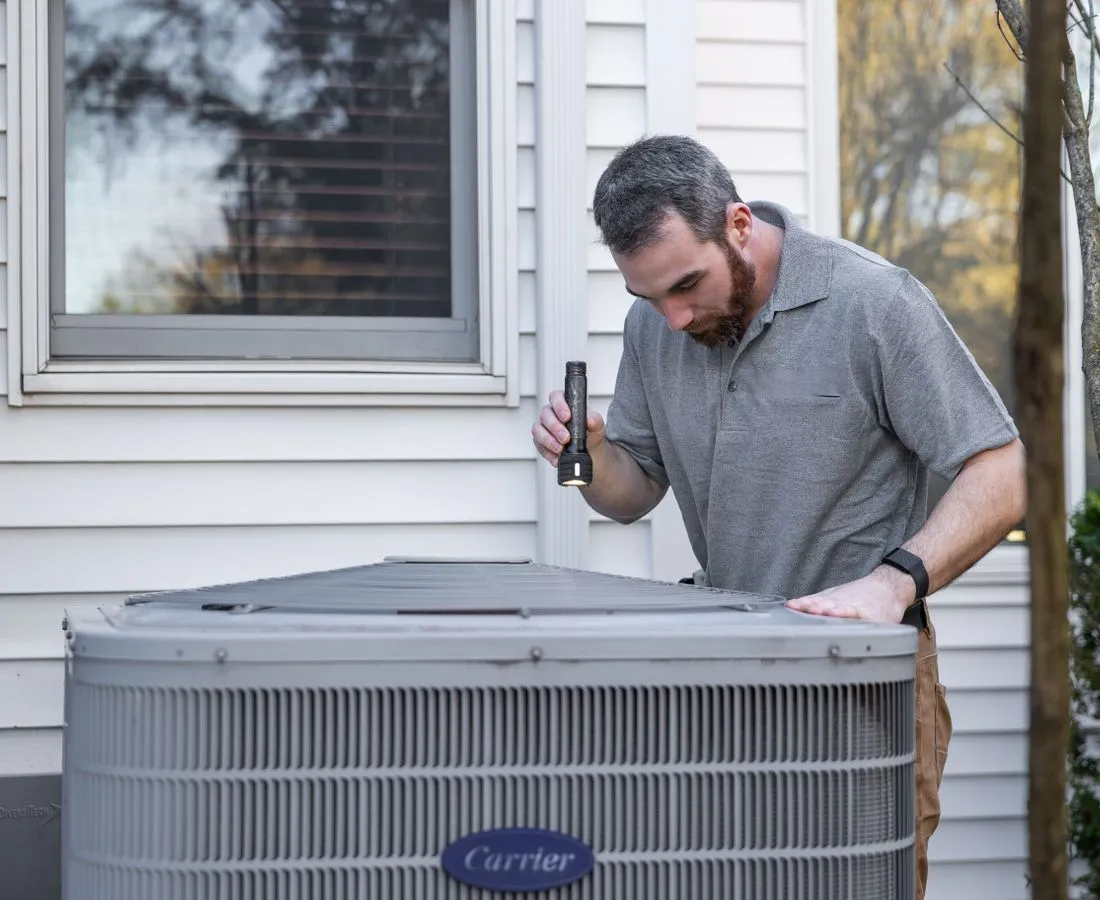
- Cleaning of the outdoor unit from dust and leaves that restrict airflow.
At our company, only technicians with F-gas certification handle refrigerant work. F-gas certification - handling of refrigerant type R32 is for a specialist, not domestic cleaning.
Difference between domestic and commercial operation
A unit in an office or business premises running practically all day gets dirtier faster than a unit in a household used mainly in the evenings and at weekends. For commercial operation we therefore recommend a service inspection twice a year, while typical households usually need only one annual check supplemented by cleaning the filter themselves during the season.
How often to book a service
We have found it beneficial to recommend an annual service inspection, ideally in spring before the first heatwave, when the unit has been idle through winter. If you also use the unit for supplementary heating in winter, it is worthwhile to add an autumn check as well. We can dispatch a service technician within 24 hours.
We also service units we did not install ourselves. We will clean, check and repair equipment from other companies. If you are still choosing an air conditioner, read on, Which air conditioner to choose for a flat, and if you are arranging a new installation, take a look at klima-ostrava.cz price and installation process in Ostrava.
You will know when a unit needs servicing
You do not need to wait for the scheduled appointment if you notice any of these signs. They are usually the first signals that a technician should inspect the unit sooner:
- Weaker cooling faster than before, even when set to the same temperature.
- Unpleasant odour from the indoor unit upon startup: typically indicating a clogged evaporator or moisture in the condensate drain line.
- Dripping water under the indoor unit: usually a blocked condensate drain.
- Louder operation indoor and outdoor units, unlike what you are used to.
None of these symptoms necessarily indicates a fault: often cleaning and an inspection are enough for the unit to work like new again. The sooner it is addressed, the lower the risk that a minor issue becomes a repair.
How long cleaning and servicing take
A basic service inspection including leak and pressure checks takes the technician approximately one hour; cleaning and disinfecting the indoor unit takes slightly longer depending on accessibility and the unit's condition. Therefore, we can complete most interventions in a single visit without needing to return.
Do you need to clean or inspect the unit?
Service technician dispatch within 24 hours.